
Pipa Through the Ages
Updated: Sep 20
The Qu‑Xiang Pipa
The first‑known version genetically linked to the present‑day pipa, descended from the barbat, an ancient instrument from Central‑Asia/Persia. It travelled across the Silk Road and firmly entered northern China during the Northern and Southern Dynasties (4th‑6th centuries CE).
The qu-xiang pipa had a pear‑shaped body, curved neck, four silk strings, few frets (compared to the modern pipa), was held horizontally across the lap, and plucked with a hard bone or wooden plectrum.
Historical documentation of the instrument derives from tomb reliefs, stone carvings, and literary accounts from the Wei‑Jin and Northern‑Wei periods. No original qu‑xiang pipa are known to have survived from this early Chinese era, with the earliest preserved instruments dating to the Tang era.
The Five‑String Pipa Wuxian Pipa
Dating back to the Silk Road origins of the barbat (4th‑6th CE), the five string pipa co‑existed and developed alongside the four‑string qu‑xiang pipa before disappearing from domestic performance around the birth of the Song dynasty.
Distinct in construction, its neck was relatively straight, with two tuning pegs on one side of the head, and three on the other to accommodate five silk strings. Early players held the instrument horizontally across the lap and plucked using a hard plectrum, consistent with common Central‑Asian lute techniques of the period. Though like the four‑string pipa, Tang‑era five‑string performers gradually shifted from plectrum to fingernail plucking.
Reaching its artistic peak in the Sui and Tang dynasties (6th‑10th CE), it became an important solo and ensemble instrument for huyue, the fashionable foreign‑influenced court music. It was used in grand banquet suites, dance accompaniment, and imperial performances in Chang’an, where specialized court virtuosos gained high repute.
Though some visual evidence of the instrument still remains today, such as the murals in the Dunhuang Mogao caves depicting five‑string pipa players in both secular and Buddhist‑themed scenes, the most important surviving physical artifact is a lavishly decorated, mother‑of‑pearl inlaid instrument.
Stored in the Shōsō‑in repository, located in Nara, Japan, this precious instrument was exported abroad in the 8th century when Tang dynasty culture was at its zenith. Period manuscript scores also survive in Japanese archives, many of which have been entirely lost inside China.
Starting from the late Tang through the Five Dynasties period, performance with the five‑string pipa went into steady decline. Complex manufacturing requirements and cumbersome handling of the instrument made it less practical than the four‑string pipa. Court music traditions fragmented amid the political unrest of the time, and the four‑string pipa gradually absorbed most of the five-string repertoire and musical functions.
By the Song dynasty (10th‑13th CE), the five‑string pipa had all but vanished from Chinese live performance. Literary texts of the period referenced it as an ancient instrument, and no firmly set playing traditions or significant manuscripts were produced to maintain its survival.
In the modern era, musicologists, luthiers, and performers study the few surviving Tang‑era artifacts, archived scores, and Dunhuang visual sources to reconstruct its build, performance methods, and repertoire. Though five ‑string pipas are crafted for period styled performances in an attempt to revive the lost medieval sound of the instrument, it mostly remains a time piece for research rather than part of the contemporary mainstream pipa practice.
The Nanyin Pipa (Nanguan Pipa)
Central to the ancient Nanyin (Nanguan) music tradition of the Minnan‑region of Fujian province, the nanyin pipa was a distinctive regional variant of the qu‑xiang pipa. Still in existence today, it is often called a “living fossil”, retaining instrumental and performance features from the Tang/Song era pipa that disappeared from mainstream northern pipa traditions after the Song dynasty.
The nanyin pipa had a pear‑shaped body, a relatively broad resonator with two crescent‑shaped “phoenix‑eye” sound holes, and a curved neck. Traditionally built of cedar wood and a paulownia wood soundboard, it had only thirteen total frets; four neck frets, and nine body frets, far fewer than the twenty-nine to thirty-one chromatic frets of a modern pipa.
While pipa performance started shifting across most of China in the late Tang era to an upright, vertical position, the southern Fujian community preserved the ancient horizontal lap‑holding posture, as seen in Dunhuang murals, Shōsō‑in Tang pipa relics, and the Han Xizai Evening Banquet 光明网painting.
Its historical roots can be traced back to the Tang‑Five Dynasties period. As political upheaval including, the An‑Shi Rebellion, displaced Tang court musicians, elements of Tang huyue court music migrated south to modern day coastal Fujian province, alongside waves of Central‑Chinese migrants. By the Song dynasty, the old curved‑neck, horizontally‑held pipa took root in Quanzhou’s thriving maritime cultural environment, merging with local folk music to form the central instrument of early nanyin ensembles.
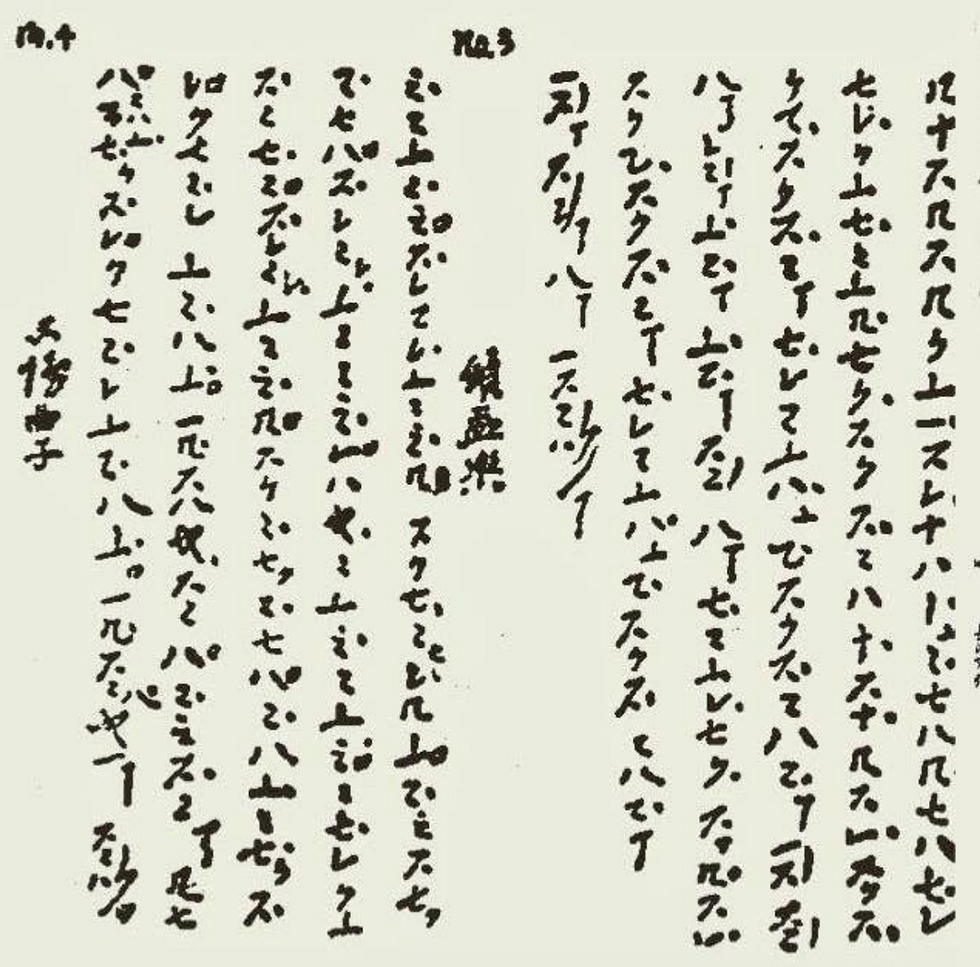
Within the nanyin “upper‑four‑instruments” ensemble, the nanyin pipa acted as a leader. Using the gong‑che cipher notation system, it articulated the melody that other instruments elaborated through heterophony.
Though a leading instrument, the nanyin pipa performers avoided the brilliant, rapid virtuosity of northern solo tradition. Its tone was soft, restrained, and well suited for intimate chamber music, rather than grand‑hall virtuosity.
During the Ming and Qing dynasties, nanyin culture flourished in Fujian, Taiwan, and among overseas Minnan diaspora communities, with many amateur music societies maintaining the tradition.
From the Ming/Qing dynasties onward, as mainstream northern pipa developed rich solo battle‑themed repertoires, the nanyin pipa remained almost exclusively an ensemble instrument for nanyin’s zhi (vocal suites), pu (pure instrumental suites) and qu (lyric songs).
In the 20th century, while the modern chromatic concert pipa became dominant in Chinese conservatories, the nanyin pipa survived mostly within folk amateur circles. In recent decades, heritage protection programs have revived its craft and performance.
Today it exists both as a core folk‑heritage instrument, with luthiers continuing to build historically‑faithful nanyin pipas, and specialist performers and research institutions studying its gong‑che scores to reconstruct ancient performance practices.
The Soprano and Bass Pipa
By comparison to their counterparts, the soprano and bass pipa are relatively modern. Driven by the demands of the symphonic‑styled Chinese national orchestras, and later pipa ensembles, these new derivations of the classic alto pipa emerged during the mid‑to‑late‑twentieth century as part of the Chinese national instrument reform movement.
Modeled in part on the Western symphony orchestra, Chinese national orchestras expanded rapidly during the 1950s and 60’s. In an attempt to adapt traditional elements to a modern format, composers and performers identified the shallow range of the pipa in comparison to the more homogenized range that a string section in a western symphony orchestra could provide. While other plucked families such as the ruan already had soprano, alto, tenor and bass variants, the pipa remained limited to its standard alto range, creating balancing issues for more diverse, ensemble part writing.
The first soprano pipa prototype was developed during the 1970s in Beijing by luthier Wu Guolong and performer Wen Bo. Scaled‑down in body size, it is tuned one octave higher than the standard modern pipa, giving it a brighter, lighter sound. To compensate for its smaller body, extra sound‑hole openings were added to boost projection. Several revised patent‑registered versions followed in the 1990s‑2000s, improving intonation and timbre.
The bass pipa had a longer evolution, with early experiments in crafting low‑pitched pipa models such as the xiangpa (resonant pipa) appeared in the 1960s. These early versions were not successful in creating stable, usable instruments for performance, and saw limited use until the early 2000s. Through the collaborative work of pipa performer Yang Jing and luthier Cao Weidong, multiple revisions to the instrument were made, and together they created and patented a more standardized bass pipa.
Working off the design of the standard alto pipa, the resonator was significantly enlarged, with a longer string scale, with heavier gauge, metal wound strings being used. Tuned one octave below the alto pipa, the bass pipa delivers a deep, resonant tone that works to balance and broaden the sound of an ensemble.
Pioneered at China Conservatory of Music by Yang Jing and other specialists, from the early 2000s onward, soprano and bass pipas, together with alto‑tenor modified pipas, became core instruments for pipa chamber ensembles and pipa quartets. From this period on, composers began writing original, large-scale chamber works for the expanded range of pipa.
Though there have been concerti and solo works written for both soprano and bass pipa, they still remain specialized, mostly used for ensemble and chamber‑music, with the standard alto pipa remaining the prominent performance instrument of the pipa family.
The Electric Pipa
The electric pipa is a contemporary modification of the traditional pipa, created to amplify the instrument and integrate it into pop, rock, and electronic music. Its development unfolded in successive phases: early experimental amplification in the late‑1970s‑1980s, custom‑built solid‑body prototypes in the 2000s‑2010s, and widespread creative adoption in global fusion music from the 2010s onward.
In the late 1970s, Chinese pipa performer Deng Wei and luthier Tian Shuangkun developed China’s first purpose‑built electric pipa. It retained the traditional pear‑shaped wooden body, but with the addition of magnetic pickups near the bridge, a slightly thicker soundboard, and reduced internal resonator volume to minimize unwanted feedback when amplified.
During the 1980s, this early electric pipa began to appear in national variety shows and popular music performances, yet it was never widely adopted within conservatory classical pipa circles. Most professional pipa players at that time preferred simply attaching external contact microphones to standard acoustic pipas for occasional amplification when performing with an orchestra or in a large hall, rather than switching to dedicated electric models.
From the 1990s through early 2000s, experimentation remained largely marginal. Acoustic pipas with add‑on pickups became more common for cross‑genre and theatre projects, but few fully redesigned purpose‑built electric pipas existed. Internationally, performers such as Wu Man collaborated on custom‑modified electric pipa prototypes for experimental multimedia works, expanding the instrument’s technical possibilities beyond purely acoustic practice.
The 2010s marked a creative turning point for the electric pipa, with multiple new custom models emerging. In 2014, industrial designer Xi Zheng created the “E‑pa” in New York, a re‑imagined electric pipa project used by pipa player Jiaju Shen, who released the mini‑album, Black Silk, performed on this instrument and founded the electronic‑folk band, THE EITHER, for international live‑stage performance.
Today, two main types of electric pipa exist: semi‑electric pipas, which keep a traditional hollow pear‑shaped body with built‑in pickups, and solid‑body electric pipas optimized for stage and studio. Though the electric pipa now commonly appears in pop, electronic, rock, film soundtracks and multimedia performances, it remains a specialized modern variant.
References
1. Sadie, S. (ed.). (2001). The New Grove Dictionary of Music and Musicians (2nd ed.). Oxford University Press, entry “Pipa”.
2. Moore, J. K. (2003). The Pipa. The Metropolitan Museum of Art, Heilbrunn Timeline of Art History.
3. Myers, J. (1992). The Way of the Pipa: Structure and Imagery in Chinese Lute Music. Kent State University Press.
4. Picken, L. (1955). The Origin of the Short Lute. Galpin Society Journal, 8, 32‑42.
5. Liu Xi. Shiming (Dictionary of Names), Eastern‑Han Dynasty, c. 200 CE.
6. Britannica. “Pipa”. Encyclopædia Britannica Academic.
7. UNESCO. (2009). Nanyin. Representative List of the Intangible Cultural Heritage of Humanity.
8. Zhuang, Y. (2001). Organology and performance practice of the Nanyin pipa. Chinese Music Research.
9. Hua‑yin Music Journal. (2022). “Instrument Reform: Bass Pipa and Pipa Chamber Music”.
10. Cao, W. (2022). Research on the Development of Modern Bass Pipa. China Musical Instrument Association.
11. Kitundu. Electric Pipa for Wu Man. Kitundu.com.
12. Shen, J. (2015). Black Silk (E‑pa) mini‑album documentation.

Comments