
Traditional Schools of Pipa
Updated: Aug 26
The Wuxi Pipa School
Rooted in Wuxi, Jiangsu province, the Wuxi (Wusih) pipa school was the earliest formally documented regional pipa school of the Qing dynasty. It emerged as a deliberate synthesis of the old Northern (Zhili) and Southern (Zhejiang) pipa traditions. Its lasting historical importance lies chiefly in producing China’s first printed pipa anthology, standardizing score symbols for later generations.
Founded by Hua Qiuping (Hua Wenbin, 1784‑1859), a local scholar, physician, painter, and musician, he modeled the Wuxi school after two masters of his age: Wang Junxi of the Northern school, known for forceful martial‑style (wu‑qu), and Chen Mufu of the Southern school, celebrated for gentle, lyrical literary‑style (wen‑qu) interpretation.
Stylistically, the Wuxi school balanced the bold, powerful articulation of the Northern tradition, and the delicate, nuanced ornamentation of the Southern school. It valued clarity, restraint, and faithful preservation of inherited repertoire, rather than highly, idiosyncratic personal embellishment.
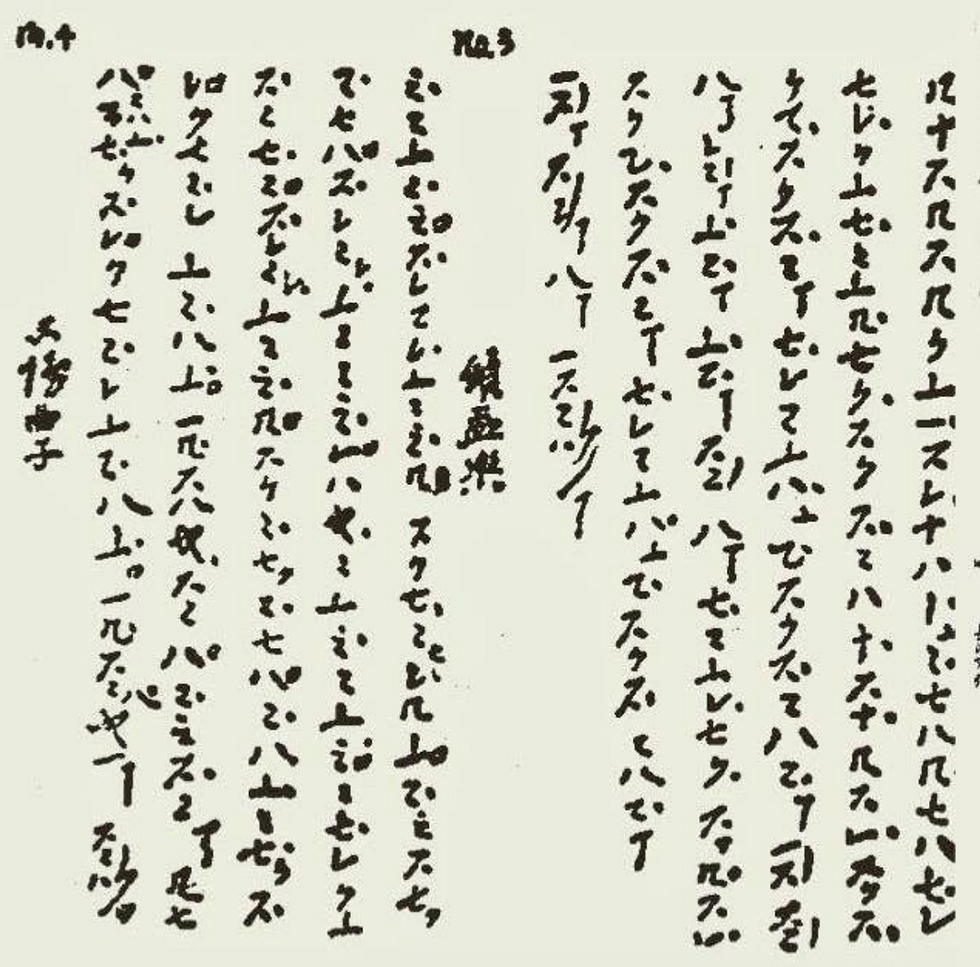
Drawing on these two lineages, Hua, together with his brothers and some colleagues, compiled and published; Esoteric Pipa Scores of Northern and Southern Schools (Hua‑shi Pu) in 1818, the first commercially printed collection of pipa scores in Chinese history. This three‑volume work preserved six large suites, and sixty-two shorter pieces, including landmark works such as Ambush from All Sides, and Moon High.
Hua adapted notation principles from existing guqin (a seven‑string fretless zither with a three-thousand-year-old history) scores, systematically formalizing pipa fingering symbols, string order, and position marking, moving pipa transmission away from an exclusively oral tradition, towards a documented, written practic.
To this day, performers and scholars attempt reconstructions of Wuxi school interpretations based on the Esoteric Pipa Scores of Northern and Southern Schools, though all acknowledging that the original, orally taught nuances, are only partially recoverable from this written tome alone.
Unlike schools such as Pudong or Pinghu, the Wuxi school never developed a large, continuous chain of famous performing virtuosi. After Hua Qiuping’s generation, direct local lineage gradually faded, yet the influence of his standardized publication spread nationwide, becoming a shared textual foundation for almost all later Qing era pipa schools.
Unfortunately, no unbroken performance lineage descends directly from Hua Qiuping today. The Wuxi school survives primarily in a historical context, though its printed anthology remains the core primary source for research on early 19th‑century pipa repertory, fingering, and aesthetic ideals.

Comments